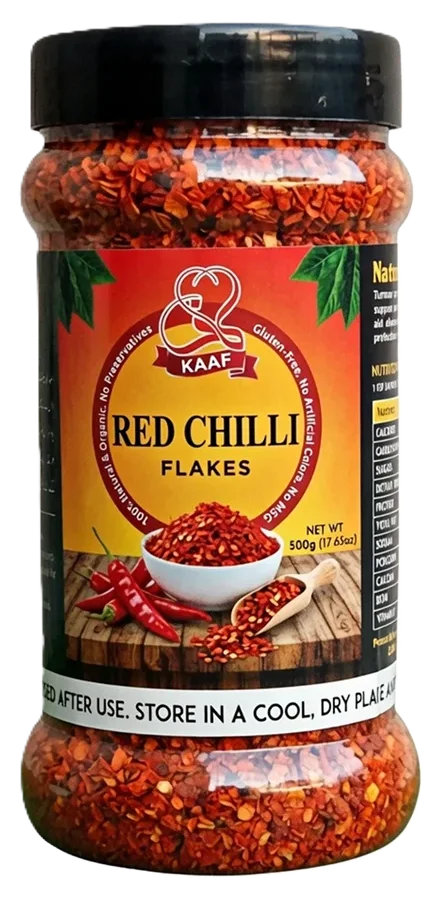
Red Chilli Flakes: 5 Powerful Health Benefits You Should Know
Introduction
Red chilli flakes are crushed dried chillies that offer a quick burst of heat and texture. They are a staple topping for pizzas, pastas, and stir-fries, adding both warmth and visual appeal to everyday meals.
Health Benefits
Boosts Metabolism
Capsaicin increases thermogenesis, helping the body burn more calories and promoting weight management.
Relieves Pain
Topical capsaicin is known for its natural pain-relieving properties, easing muscle and joint discomfort.
Aids Digestion
Stimulates the production of gastric juices, aiding in digestion and reducing bloating.
Antibacterial Properties
Rich in antimicrobial compounds that help fight off common bacterial infections and support immune defense.
Rich in Vitamins
Loaded with Vitamin C and other antioxidants, it helps fight free radicals and protects cells from damage.
💡 Did you know?
Red chilli flakes retain more Vitamin C than fresh chillies due to the drying process, making them a surprisingly potent source of this essential nutrient.
Nutritional Value
Quick Tips
💡 Pro Tip
Sprinkle red chilli flakes over pizzas and pastas right before serving for maximum flavor and a satisfying crunch—start with a pinch and add more to your taste!
👑 Master Tip
Store your Kaaf Foods red chilli flakes in an airtight jar away from direct heat and sunlight to preserve their vibrant red color and spicy aroma.
FAQ
Are red chilli flakes as healthy as fresh chillies?
Can I use them every day?
Do they lose their heat over time?
Can I substitute fresh chillies?
Are they safe for people with allergies?
Conclusion
Red chilli flakes are a versatile, fiery condiment that adds instant texture and heat to dishes while offering impressive metabolism-boosting and pain-relieving health benefits.
🍃 Love Healthy Recipes?
Join our family on Kaaf Foods YouTube! Get expert spice guides, health deep-dives, and delicious recipes.
Subscribe
References
- USDA FoodData Central – Spices, pepper, red or cayenne
- National Institutes of Health (NIH) – Antioxidant properties
- World Health Organization (WHO) – Dietary guidelines
You May Also Like
[kaaf_related_blogs]Information is for educational purposes only. Always consult a healthcare professional.