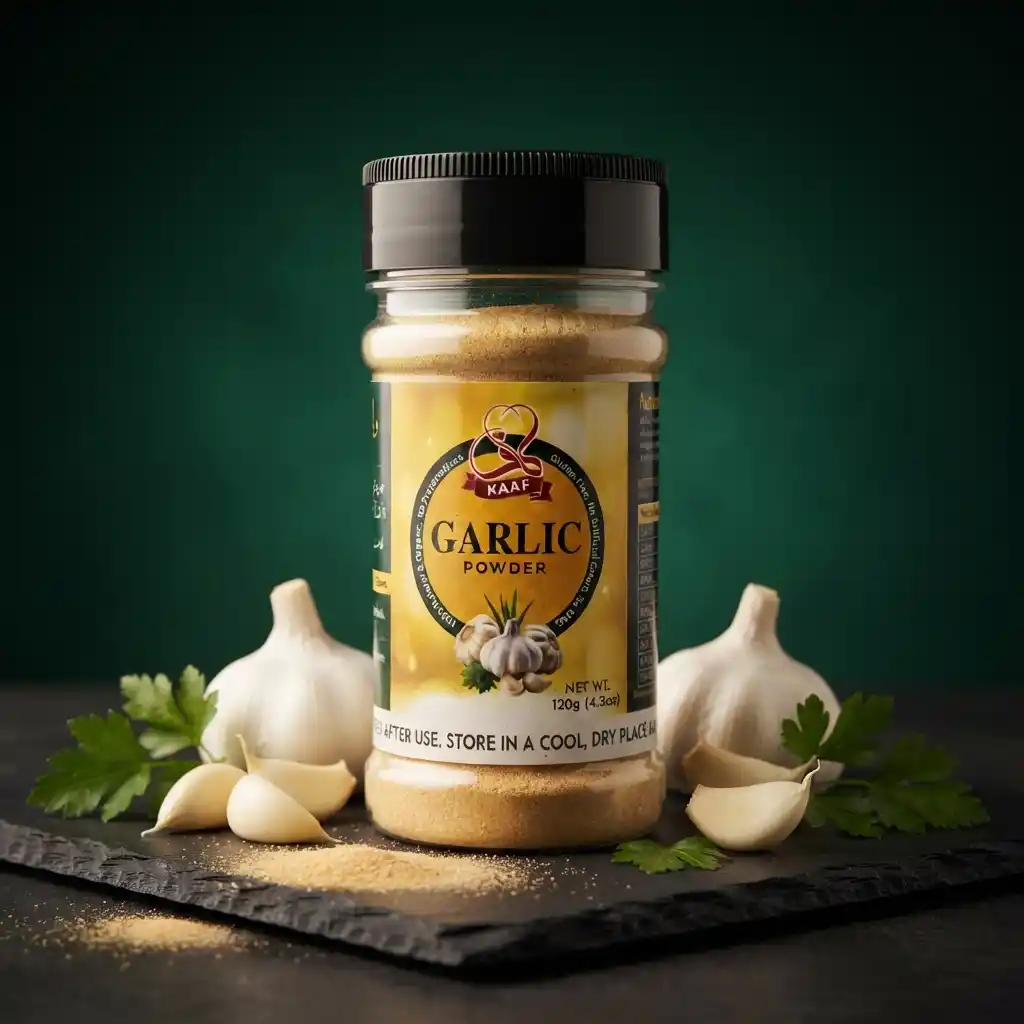
5 Common Myths About Garlic Powder Busted by Science
Introduction
Garlic powder is one of the most widely used seasonings across global home kitchens and professional restaurants alike. Yet, despite its popularity, several misconceptions persist—from claims that it contains artificial chemicals to myths that dehydration strips away all garlic health benefits. Nutritional science tells a very different story! Let's bust 5 common myths about garlic powder once and for all.
5 Garlic Powder Myths Busted
Myth 1: "Garlic powder is filled with artificial chemicals & preservatives."
The Fact: 100% pure garlic powder (like Kaaf Foods) is made solely from fresh garlic cloves that have been sliced, dehydrated at controlled low temperatures, and finely milled into powder. It contains zero artificial preservatives, zero anti-caking chemicals, and zero added sodium.
Myth 2: "Dehydration destroys all garlic health benefits & antioxidants."
The Fact: While raw garlic releases fresh allicin when crushed, pure garlic powder retains concentrated alliin precursors, organosulfur antioxidants, potassium, and minerals. When garlic powder is rehydrated in food or soups, active compounds re-engage to support heart and immune health!
Myth 3: "Garlic powder is harsh and causes severe acidity or stomach ulcers."
The Fact: Garlic powder is actually gentler on sensitive digestive systems than raw chopped garlic! The dehydration process mellows raw volatile digestive sting while preserving rich umami aroma, making it far easier to digest in daily meals.
Myth 4: "Garlic powder burns instantly and ruins oven roasting."
The Fact: Fresh minced garlic chunks contain high water content and scorch easily in high-heat roasting ovens, turning bitter. Fine garlic powder coats vegetables, meats, and potatoes evenly, caramelizing into a savory golden crust without bitter burnt spots.
Myth 5: "Garlic powder is just another name for cheap garlic salt."
The Fact: Garlic salt is primarily table salt (sodium chloride) blended with a small percentage of garlic. Pure garlic powder, on the other hand, is 100% pure dehydrated garlic with zero sodium, giving you total control over your dietary salt intake!
💡 Science Fact: Bioactive Retention
Research published in the Journal of Agricultural and Food Chemistry proves that controlled low-temperature dehydration preserves up to 90% of garlic's natural antioxidant activity compared to fresh garlic cloves!
Nutritional Value
Quick Storage Tips
💡 Storage Tip
Garlic powder naturally absorbs atmospheric humidity. Keep your jar tightly closed in a cool, dark kitchen cabinet away from stove steam.
👑 Master Tip
Always use a clean, bone-dry spoon when scooping from your Kaaf Foods garlic powder jar to maintain free-flowing freshness for over 12 months!
FAQ
Is garlic powder as healthy as fresh raw garlic?
Does garlic powder contain added sodium or table salt?
Why does pure garlic powder clump together?
How much garlic powder replaces one fresh garlic clove?
Conclusion
Pure garlic powder is not a "fake" substitute—it is a 100% natural, nutrient-dense superfood that offers maximum flavor convenience, easy digestion, and heart health benefits!
🍃 Love Nutritional Science & Spices?
Join our family on Kaaf Foods YouTube! Get expert spice guides, health deep-dives, and delicious recipes.
Subscribe
🌿 Premium Garlic Powder
- 100% Dehydrated & Pure
- No Added Salt or Anti-Caking Chemicals
- Rich Savory Aroma & Antioxidants
References
- USDA FoodData Central – Dehydrated Garlic Powder (NDB_No 02020)
- Journal of Agricultural and Food Chemistry – Antioxidant stability in dehydrated allium species
- World Health Organization (WHO) – Sodium reduction and dietary guidelines
You May Also Like
Information is for educational and culinary inspiration purposes only. Always consult a dietary professional for specific nutritional guidance.